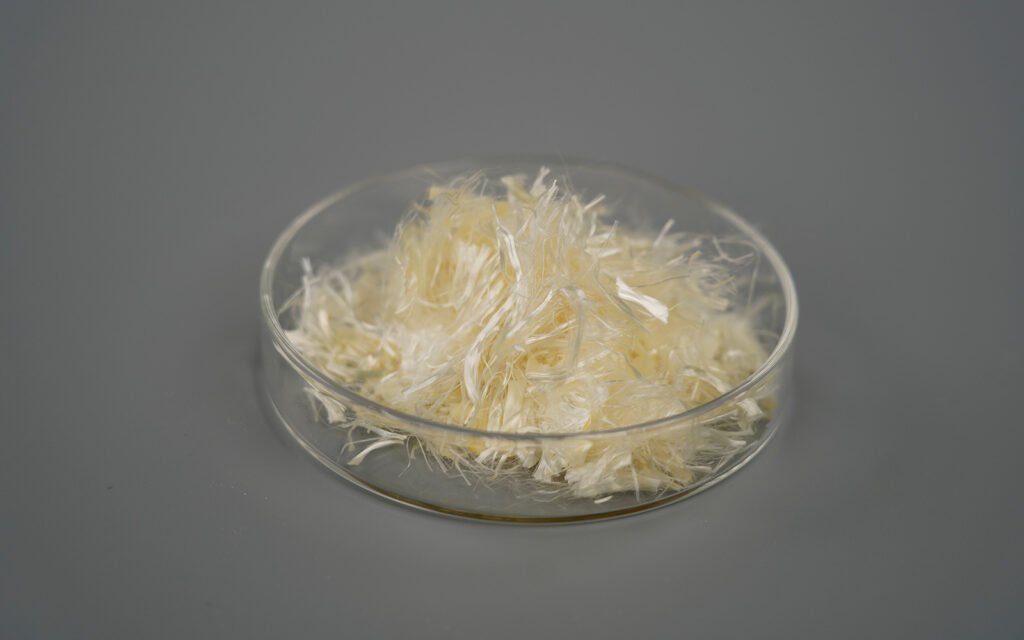
Salutations toward our broad discussion on synthetic acrylonitrile fiber.
carbon fiber precursor textile is a fabricated substance widely identified for its remarkable features. The creation approach requires the molecular assembly of acrylonitrile chemical component. This leads to a robust tendril possessing extensive strength and top-quality chemical resistance. Consequently, polyacrylonitrile obtains applications in wide-ranging sectors, embracing apparel, mats, and high-performance uses. Further analysis continues to analyze its potential in emerging technologies, such as covers.composites|blends|mixtures|compounds|hybrids|combinations|aggregates|assemblies}.
Our Adaptable Field of Polyacrylonitrile Fiber
Polyacrylonitrile yarn holds as a remarkably multipurpose material, discovering widespread employment across diverse industries. Its unique chemical structure – primarily featuring acrylonitrile components – grants it top-tier properties. Commonly, it’s identified for its potential to develop acrylic costumes, but its potential extends greatly beyond this initial territory.- Its prominent tensile robustness makes it excellent for technical textiles.
- In addition, merging it with diverse polymers furnishes materials displaying boosted capacity.
- Designated grades offer resistance to chemicals, emissions, and fire.
Surveying the Traits and Implementations of PAN Filament
Polyacrylonitrile woven filament presents a uncommon combination of traits making it qualified for a comprehensive range of purposes. Its marked tenacity, superior chemical durability, and satisfactory dimensional stability are critical considerations in its efficacy. Besides, the compound exhibits natural flame retardancy, elevating its shielding profile. Usual applications include:
- Protective costumes
- Advanced strings
- Soil stabilizers for erosion containment
- Enhancement in fused elements
Enhancements in Polyacrylonitrile Fiber Manufacturing
New developments in PAN filament formation concentrate several significant sectors. Selected important change involves integrating cutting-edge material shaping procedures, such as electrospinning, granting for increased management over filament design and attributes. Also, investigation into next-generation media and ingredients seeks to lower ecological influence and improve thread quality in multiple environments. Lastly, projects are directed towards inventing fluid and expandable assembly plans for large-scale usage.
acrylonitrile polymer Fiber: From Woven to Modern Compounds
Poly acrylonitrile fiber, often abbreviated as PAN, initially found the principal role in particular cloth weave, yielding superior toughness and various noteworthy shine. Nonetheless, PAN acrylonitrile polyacrylonitrile fiber’s distinct features, primarily those great atom composition, maintain led to some swift advancement into distinct field to modern blended creations, upon which such serves in the vital fortifying segment.Less wasteful Solutions with Recycled Polyacrylonitrile Fiber
Cutting-edge processes execute reused PAN material in an environmentally responsible option against established cloth generation. It technique lowers trash harm together with reduces an usage upon non-renewable supplies. Besides, commodities fabricated using the material offer world-class effectiveness traits covering wide-ranging industries spanning throughout refining installations toward resilient clothing.
Barriers and Forthcoming Streams in PAN Fiber Technology
Considering significant innovations in synthetic polymer filament thread engineering, a variety of problems linger. Production budgets as of today embody a key hindrance, mainly for overall acceptance. Moreover, obtaining stable properties spanning significant filament strand sets demonstrates troublesome. Gazing toward the future, imminent trends contain exploration into eco-conscious polymeric precursor precursors, amplifying fiber robustness through state-of-the-art fabrication systems, and expanding functions in specialized realms covering defensive safeguard and space sections.
Comprehending the Compositional Structure of Polyacrylonitrile Fiber
Organic polymer filamentous demonstrates a continuous structure built chiefly from cyclic cyanoethylene elements. Numerous vinyl cyanide element possesses a triple-bonded carbon pair link, leading in pronounced electrochemical gradient and encouraging powerful interchain Polyacrylonitrile Fiber contacts. This particular configuration provides the notable hardiness and heat resilience defining of carbon-nitrile polymer filamentous fiber.PAN Fiber: A In-depth Look at Synthesis Operations
The construction of polyacrylonitrile woven fiber typically takes place with the polymerization of acrylonitrile unit. This technique often involves radical polymer formation in a matrix or heterogeneous system system, frequently utilizing initiators such as azobisisobutyronitrile (AIBN) or peroxides to prompt the reaction. The yielded polymer is then incorporated in a effective solvent like dimethylformamide (DMF) or N-methylpyrrolidone (NMP). Subsequent fiber shaping utilizing a opening creates the thready structure, which is then frozen in a temperance bath to freeze the fabric. Finally, the woven units undergo flushing, moisture removal and extra treatments to get the desired features for the completed polyacrylonitrile textile.
Thanks to reviewing this full treatise covering chemical acrylonitrile thread.Enjoy a successful day.